· Launchbox Team · Freelancer Productivity · 12 min read
5 Tools Every Pakistani Freelancer Should Be Using
The essential tools for Pakistani freelancers in 2026 — from invoicing and time tracking to communication and project management. Practical picks that actually work in Pakistan.
Let me guess. You are freelancing from Pakistan, earning in dollars, and still managing everything with a combination of WhatsApp voice notes, Notes app invoices, and vibes. No judgment. We have all been there. But if you are serious about growing your freelance income in 2026 and not losing your mind in the process, your toolkit matters a lot more than you think.
Pakistan is now one of the top freelancing countries in the world. Thousands of developers, designers, writers, and marketers across Lahore, Karachi, and Islamabad are pulling in real money from international clients. But here is the thing: the tools and systems that work for a freelancer in Austin or Berlin do not always translate directly to someone working from DHA or Johar Town. We have different payment realities, different internet situations, and honestly, different work cultures.
So instead of giving you the usual generic listicle, here are five tools and categories that actually make sense for freelancers working from Pakistan, based on real challenges we see every single day.
1. Invoicing and Getting Paid (Without Losing Money on Every Transfer)
This is the one that keeps every Pakistani freelancer up at night. You did the work. The client approved it. Now you need to actually get the money into your Pakistani bank account. And if you have not set up the right system, you are leaking money on every single payment.
The two big names here are Payoneer and Wise (formerly TransferWise), and both are worth having.
Payoneer has been the default for Pakistani freelancers for years. It integrates directly with platforms like Upwork and Fiverr, and you can withdraw to your local bank account in PKR. The fees are not the lowest, but it works reliably, and that counts for a lot in a country where payment infrastructure can be unpredictable.
Wise is increasingly popular because the exchange rates are typically better. If you have direct clients (not through a platform), Wise gives you virtual bank details in USD, GBP, and EUR that your clients can pay into as if they are sending a local transfer. This is a game-changer for the client experience, because asking someone to wire money internationally feels clunky. With Wise, they just do a normal bank transfer.
Here is what matters specifically for Pakistan: the PKR conversion. The rupee fluctuates, and the difference between the mid-market rate and whatever your bank or payment processor gives you can be significant on larger payments. A 2-3% spread on a $2,000 invoice is PKR 12,000 to 18,000 gone. Over a year, that adds up to hundreds of thousands of rupees. Set up both Payoneer and Wise, compare the total cost (fees plus exchange rate) for each payment, and use whichever gives you more rupees in your account that week.
For the actual invoicing, tools like Wave (free) or the built-in invoicing on Wise work perfectly fine. The point is to stop sending invoices as PDF attachments you made in Canva. Professional invoicing tools track payments, send reminders, and make you look like a real business, because you are one.
2. Time Tracking (Your Best Defense Against Scope Creep)
If you are working with hourly clients, time tracking is not optional. It is literally how you get paid. But even if you work on fixed-price projects, tracking your time will change how you think about your business.
Toggl Track and Clockify are the two best options, and both have generous free plans.
Toggl is the one most freelancers start with. It is dead simple: you hit start, you work, you hit stop. It syncs across your phone and laptop, which is useful when you are switching between devices (or working from your phone during a load shedding situation at home). The free plan covers everything a solo freelancer needs.
Clockify is completely free with no user limits, which makes it good if you eventually hire a virtual assistant or start working with subcontractors. It also generates the kind of detailed reports that hourly clients love to see attached to invoices.
Here is why this matters specifically for Pakistani freelancers: scope creep is rampant in our market. Clients ask for “one small change” that turns into three hours of extra work. Without time tracking, you eat that cost and resent the project. With it, you have a clear log that shows exactly how long everything took, and you can have an honest conversation with the client about additional billing. No drama, just data.
The other benefit nobody talks about: time tracking shows you where your hours actually go. Most freelancers are shocked to find out how much time they spend on admin, communication, and revisions versus actual billable work. Once you see those numbers, you start making better decisions about which clients to keep and which to drop.
3. Communication Tools (Because Your Internet Cannot Afford to Waste Bandwidth)
Every international client expects you to be on Slack. Every client meeting happens on Zoom or Google Meet. This is non-negotiable. But in Pakistan, these tools come with a catch: bandwidth.
Slack is the standard for async communication, and the good news is it is mostly text-based, so it works fine even on mediocre internet. The free plan limits message history, but honestly, for most freelancer-client relationships, that does not matter. What matters is that you respond promptly, keep your communication in one organized place (instead of scattered across WhatsApp, email, and Instagram DMs), and look professional doing it.
Pro tip for Pakistan: turn off auto-download for media files in Slack settings. When a client dumps a folder of reference images into a channel and your PTCL connection chokes trying to download everything at once, your whole system grinds to a halt. Download things manually, on your terms.
Zoom remains the default for video calls. But here is where Pakistani freelancers need to be strategic. A stable Zoom call needs at least 3-5 Mbps upload and download. During peak evening hours, your home connection might struggle to deliver that consistently.
Practical tips that actually help: keep your camera off when the call does not require it (most client check-ins do not), close other tabs and downloads before joining, and use the Zoom desktop app instead of the browser version since it handles poor connections better. If your home internet is genuinely unreliable, consider working from a coworking space with dedicated fiber internet on days when you have important client calls. Dropping off a call mid-presentation is not a great look, and it is entirely preventable.
Loom deserves an honorable mention here. Instead of scheduling a live call for every update, record a quick Loom video walking through your work. You can do it when your internet is stable (even at 2 AM), the client watches it on their time, and nobody has to coordinate across time zones. This is huge for Pakistani freelancers working with clients in the US or Europe where the time difference is already awkward.
4. Project Management (Stop Keeping Everything in Your Head)
Once you have more than two active clients, you cannot keep track of everything in your head or in a notebook. You will miss deadlines. You will forget follow-ups. You will double-book yourself. It is not a matter of if, but when.
Notion, Trello, and Asana are the three tools that come up most in freelancer conversations, and each fits a different style.
Trello is the easiest to start with. Drag cards across columns: To Do, In Progress, Done. That is basically it. If you are a visual thinker and want something you can set up in ten minutes, Trello is your answer. A lot of Pakistani freelancers use it as a shared board with clients so everyone can see the project status without constant WhatsApp messages asking “bhai, kahan tak aya kaam?”
Notion is more powerful but takes time to learn. Think of it as a combination of notes, databases, wikis, and project boards. If you like building systems and want a single place for your client briefs, SOPs, invoicing records, and project tracking, Notion can handle all of it. The learning curve is real though. Give yourself a weekend to set it up properly, or you will abandon it within a week.
Asana is the most structured of the three. It is built for proper project management with timelines, dependencies, and team assignments. If your clients are larger companies or agencies, there is a good chance they already use Asana and will invite you to their workspace. Knowing your way around it makes you look organized, and clients notice that.
For Pakistani freelancers specifically, the key benefit of any project management tool is reducing back-and-forth communication. Our client culture tends to be very chat-heavy. WhatsApp groups with 47 unread messages, voice notes that are six minutes long, follow-up messages asking “seen?” Instead of all that, point your clients to a shared board where they can see exactly what stage their work is at. It saves both of you hours every week and prevents the kind of miscommunication that leads to revision hell.
A small nudge
Working from home but struggling with internet and focus?
Launchbox gives you high-speed fiber, full power backup, and a distraction-free workspace in DHA Phase 5, Lahore. Day passes start at PKR 1,500.
5. A Workspace That Actually Works (The Tool Nobody Thinks Of)
You have got your invoicing sorted, your time tracked, your Slack notifications on, and your Trello board organized. Great. But here is the uncomfortable truth: none of that matters if your workspace keeps sabotaging you.
Your physical environment is a tool. Maybe the most important one. And in Pakistan, it is the one most freelancers neglect the longest.
We all know the drill. You are deep in a project, the electricity cuts out, and your UPS gives you twenty minutes before everything goes dark. Or you are on a client call and someone in the house decides to vacuum right outside your door. Or your internet has been “intermittent” for three days and the provider keeps saying the technician will come “kal.” These are not minor inconveniences. They are income killers.
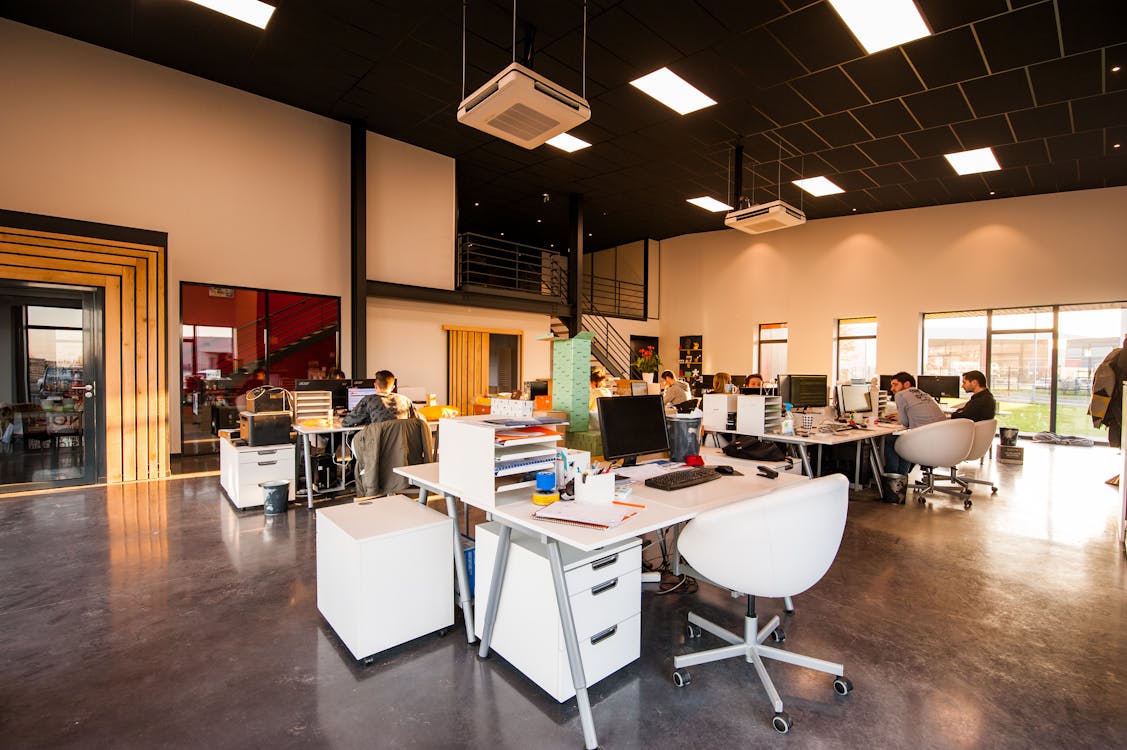
This is exactly why coworking spaces exist, and why they have become so popular with freelancers in Lahore over the past couple of years. A proper coworking space gives you the boring but critical infrastructure that is impossible to replicate at home without spending lakhs: dedicated high-speed fiber internet, full generator power backup, air conditioning, ergonomic furniture, and meeting rooms for when you need to take a call without your nephew playing cartoons in the background.
At Launchbox in DHA Phase 5, we see freelancers walk in stressed about the basics and walk out with one less thing to worry about. The internet works. The power does not cut. The chair does not destroy your back. It sounds boring, and it is. That is the point. Your workspace should be invisible. It should just work so you can focus on the things that actually make you money.
The other thing that happens, and every freelancer who has made the switch will tell you this, is the community effect. When you work around other freelancers, developers, and remote workers, you pick up clients through referrals, you learn about tools and approaches you would never discover alone, and you feel noticeably less isolated. Freelancing is lonely. Your workspace does not have to be.
Plans start at PKR 1,500 per day for a Day Pass, PKR 15,000 per month for a Flexible Desk, or PKR 22,500 per month for a Dedicated Desk. No contracts, no deposits. You can book a free visit to see the space before committing to anything.
Putting It All Together
The reality of freelancing from Pakistan in 2026 is that the opportunity is enormous, but the infrastructure challenges are real. The freelancers who are growing their income year over year are not just the most talented ones. They are the ones who have set up systems that handle the boring stuff so they can focus on the work that pays.
Get your payments sorted so you stop leaking money on every transfer. Track your time so you actually get paid for all the hours you work. Use proper communication tools so clients see you as a professional, not just “the person on WhatsApp.” Manage your projects in one place so nothing falls through the cracks. And set up a workspace that does not let you down when it matters most.
None of this is glamorous. But the freelancers who build these systems are the ones who go from earning $500 a month to $5,000 a month, because they are not constantly fighting their own setup. They are just doing the work.
What is the best way to receive international payments as a freelancer in Pakistan?
Payoneer and Wise are the two most widely used platforms. Payoneer is more established locally with direct PKR bank withdrawals, while Wise often offers better exchange rates. Many freelancers maintain accounts on both and compare the total cost (fees plus exchange rate) for each payment to maximize what lands in their Pakistani bank account.
Do I really need time tracking software as a freelancer?
If you have hourly clients, absolutely. Tools like Toggl and Clockify generate professional reports that justify your invoices and prevent disputes. Even for fixed-price projects, tracking your time helps you price future work more accurately and identify which projects are actually profitable versus the ones eating your hours.
Can I use Zoom and Slack with slow internet in Pakistan?
Slack works fine on most connections since it is primarily text-based. Zoom needs at least 3-5 Mbps for stable video. If your home internet is unreliable, work from a coworking space on days with important calls, keep your camera off when possible, and use the desktop app instead of the browser version for better performance on weak connections.
How much does a coworking space cost for freelancers in Lahore?
At Launchbox in DHA Phase 5, Lahore, day passes start at PKR 1,500 per day, flexible desks are PKR 15,000 per month, and dedicated desks are PKR 22,500 per month. All plans include high-speed internet, full power backup, meeting room access, and air conditioning with no long-term contracts required. Check current pricing for full details.
- freelancer productivity