· Launchbox Team · Coworking · 5 min read
How Coworking Spaces Foster Innovation (Without Trying Too Hard)
Innovation does not come from ping pong tables and beanbags. It comes from putting different people in the same room and letting them work. Here is how coworking spaces make that happen.
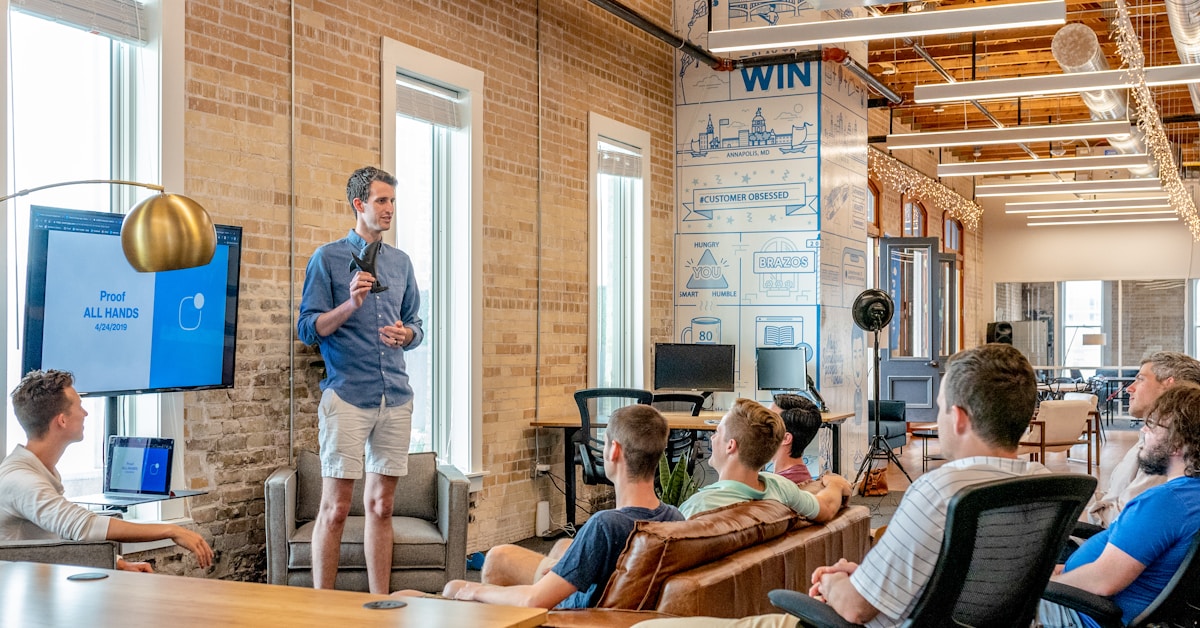
There is a popular image of innovation that involves whiteboards covered in sticky notes, brainstorming sessions with buzzwords, and offices designed to look like adult playgrounds. Most of it is theater.
Real innovation, the kind that leads to actual products and solutions, usually happens more quietly. It happens when a developer overhears a designer talking about a problem and realizes he built something similar last year. It happens when a founder mentions an idea over lunch and the person across the table says, “I know someone who tried that. Here is what they learned.”
Coworking spaces are unusually good at creating these moments. Not because they try hard to manufacture innovation, but because they put the right ingredients in the same room and let chemistry do the rest.
Different people, different perspectives
The typical corporate office is full of people with similar backgrounds doing similar work. A marketing agency is full of marketers. A software company is full of engineers. This is efficient for execution but terrible for fresh thinking.
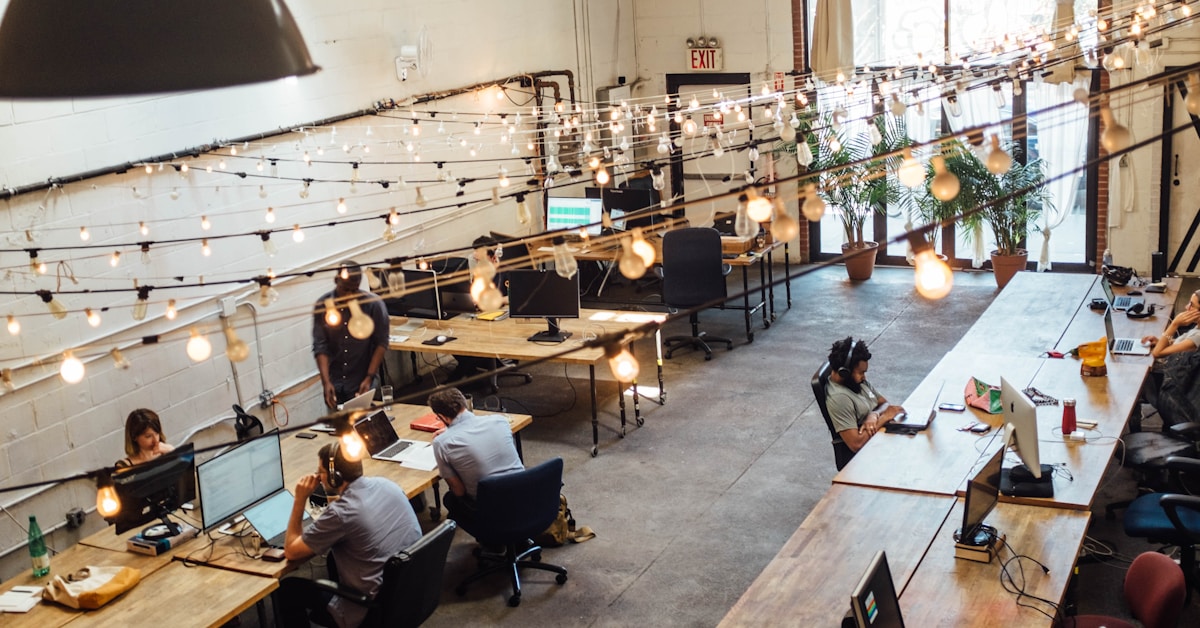
Walk around a coworking space and you will find web developers, graphic designers, content writers, financial consultants, startup founders, data analysts, and marketing specialists all within earshot of each other. This mix is not random. It is what makes the space valuable beyond just desks and WiFi.
When you are surrounded by people who think differently, your own thinking improves. The designer sees the developer’s problem from a user perspective. The marketer suggests a distribution angle the founder had not considered. The consultant shares a framework that works across industries.
These are not formal collaborations. They are informal, accidental, and often more valuable than the scheduled brainstorm you had on your calendar.
The space encourages conversation
Good coworking spaces are designed so that people naturally cross paths. The kitchen, the common area, the printer queue, the walk to the meeting room: all of these are opportunities for casual conversation.
At Launchbox, the pantry is where most organic connections happen. Someone is making chai, someone else is waiting for the kettle, and suddenly you are talking about a project, a tool, or a shared frustration. These conversations are short, unplanned, and surprisingly productive.
This is not about forced networking events or icebreaker activities. Those tend to produce business cards, not actual relationships. The best coworking communities form through repeated proximity: seeing the same faces, sharing the same space, and gradually building trust through small interactions over weeks and months.
Access to skills you do not have
Every founder and freelancer hits a point where they need help with something outside their expertise. The developer needs a logo. The designer needs someone to write copy. The content creator needs help setting up their website.
In a home office, the default is to Google it, watch a YouTube tutorial, and do a mediocre job yourself. In a coworking space, you can often find someone two desks away who does that thing professionally.
This is not just about saving time (though it does). It is about getting a better result because you tapped into someone else’s expertise instead of faking your way through it. And these exchanges often go both ways, which builds the kind of mutual trust that leads to real collaborations down the road.
Watching others work is motivating
This is subtle but real. When you are surrounded by people who are building things, shipping projects, and making progress, your own standards go up. Not through competition, but through osmosis.
At Launchbox, you see a freelancer land a big client and celebrate quietly with a better-than-usual lunch. You see a startup team working late because they are excited about what they are building. You see a remote worker nail a presentation because the meeting room and internet were solid.
This creates a culture of ambition that is grounded in real work, not hype. It is not “we are changing the world” energy. It is “I am going to do good work today and so is everyone around me” energy. That is the kind of environment where useful ideas actually emerge.
Innovation is a byproduct, not a goal
The coworking spaces that try hardest to manufacture innovation (with “disruption labs” and “innovation hours”) usually produce the least of it. Innovation is not something you schedule. It is something that happens when capable people with different backgrounds work near each other over time.
The job of a coworking space is to provide the basics really well: fast internet, reliable power, a quiet environment, and a community of serious people. The innovation takes care of itself.
That is the approach at Launchbox. No events you are obligated to attend. No networking sessions with name tags. Just a room full of people doing good work, a kitchen where conversations happen, and an environment where asking the person at the next desk for help is completely normal.
The best ideas do not come from brainstorming sessions. They come from Tuesday afternoon, over chai, when two people who would never have met otherwise discover they are working on the same problem from different angles.
- coworking
- innovation