· Launchbox Team · Coworking Lahore · 14 min read
What to Look for When Choosing a Coworking Space
A practical checklist for choosing a coworking space in Lahore — internet speed, power backup, location, pricing, and the things most people forget to check before signing up.
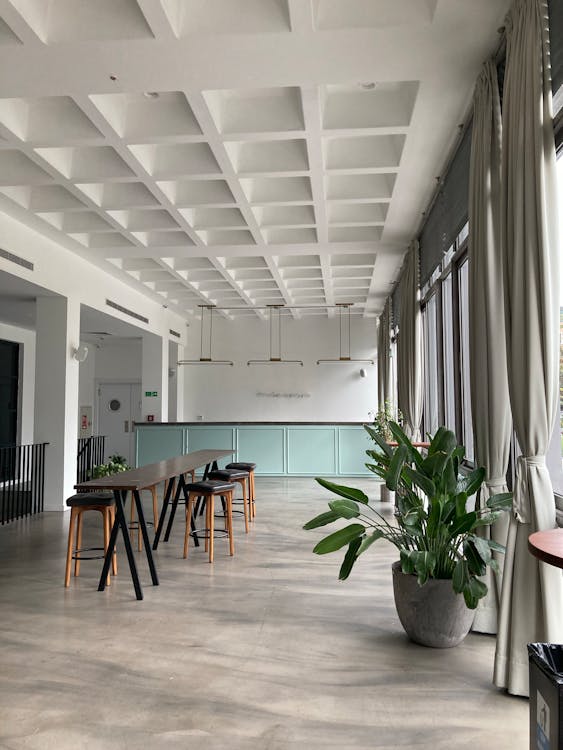
So you have decided you are done working from your bedroom. The dining table is not cutting it anymore, the cafe WiFi dropped your Zoom call for the third time this week, and your family thinks “working from home” means you are free to run errands at 2pm. Fair enough. A coworking space sounds like the move.
But here is the thing — not all coworking spaces are built the same. Some look fantastic on Instagram but fall apart the moment you try to join a video call. Others have great internet but the AC barely works in July. And a few will hit you with surprise charges that were nowhere on the pricing page.
This is your no-nonsense checklist for picking a coworking space in Lahore that actually works for you. Not the fanciest one. Not the cheapest one. The right one.
Test the Internet Yourself — Do Not Take Their Word for It
This is the single most important thing, and most people skip it entirely. Every coworking space will tell you they have “high-speed internet.” That phrase means absolutely nothing. You need to test it yourself, on your own device, during a busy afternoon when the space is full.
Here is what to actually check:
- Download speed: You want at least 50-100 Mbps. Anything less and you will feel it when multiple people are on calls.
- Upload speed: This is the one everyone forgets. Download speed gets all the attention, but upload speed is what determines whether your face freezes on Zoom or not. You need at least 10-20 Mbps upload for reliable video calls. A lot of spaces in Lahore have 100 Mbps download but only 5 Mbps upload — that is a problem.
- Consistency: Speed at 10am when the space is empty means nothing. Test it at 2pm on a weekday when every desk is occupied and half the room is on Google Meet.
- Backup connection: Does the space have a secondary ISP? In Lahore, even fiber connections go down. PTCL maintenance, StormFiber outages, Nayatel hiccups — it happens. A good space has a backup line that kicks in automatically.
Pull up fast.com or speedtest.net on your phone during your trial day. If the space manager seems uncomfortable with you testing the WiFi, that tells you everything you need to know.
Power Backup: The Thing That Separates Good Spaces from Bad Ones
If you have lived in Lahore for more than one summer, you know load shedding is not a question of “if” but “when” and “how long.” From April through September, power cuts are a fact of life in most parts of the city. Even areas like DHA and Gulberg, which get better treatment than the rest, are not immune.
Here is what you need to ask about power backup:
- UPS coverage: Does every desk have UPS protection, or just the common areas? Your screen going black mid-sentence during a client call is not a minor inconvenience — it is a professional embarrassment.
- Generator: Does the space have a generator? How fast does the switchover happen? A good setup switches in under 5 seconds. A bad one leaves you in the dark for 30 seconds to a minute while things “come back on.” That gap kills your flow and drops your calls.
- AC on generator: Some spaces run the generator but turn off the air conditioning to save diesel costs. In July in Lahore, that is basically unusable. Ask specifically whether the AC stays on during power cuts.
At Launchbox in DHA Phase 5, we run full UPS plus generator backup with fast switchover. Your screen stays on, your calls stay connected, and the AC keeps running. It is not glamorous, but it is the kind of thing you only appreciate when every other space around you is sitting in the dark.
Location and Your Daily Commute
Here is a mistake a lot of people make: they pick the “best” coworking space in Lahore without thinking about how they are actually going to get there every day. A workspace with a 45-minute commute through Lahore traffic is a workspace you will stop going to within two months. Guaranteed.
Think about your commute realistically:
- Peak hours matter: The drive from Johar Town to DHA takes 15 minutes at 7am and 50 minutes at 9am. Plan for the 9am version.
- Fuel costs add up: At current petrol prices, a daily 20km round trip costs you roughly PKR 8,000-10,000 per month. That is a real cost that should factor into your decision.
- Careem and Uber availability: If you do not drive, check how easy it is to get a ride to and from the space. Some areas of Lahore are dead zones for ride-hailing after 8pm.
- Parking: Does the space have parking? Is it free or paid? Is it covered? In Lahore summers, leaving your car in the sun for 8 hours means getting into a 60-degree oven at the end of your workday.
DHA Phase 5 sits in a sweet spot — well connected to Cantt, Gulberg, and Model Town via multiple routes, with plenty of food options nearby so you are not driving somewhere else for lunch. But the best location for you depends entirely on where you live. A 15-minute commute should be your target. Twenty minutes is fine. Anything over thirty, and you are going to start making excuses to stay home.
Pricing Transparency: What Is Included and What Is Not
Coworking pricing in Lahore ranges from suspiciously cheap to surprisingly expensive. The number on the website is only half the story. What matters is what is actually included in that number.
Before signing up, get clear answers on:
- Electricity: Is it included? Some spaces charge a flat fee but add an electricity surcharge during summer when AC usage goes up. That “PKR 8,000/month” plan suddenly becomes PKR 12,000 in July.
- Meeting rooms: Are they included in your plan, or charged by the hour? If you take client calls daily, per-hour meeting room fees can add PKR 3,000-5,000 to your monthly bill.
- Printing: Most spaces charge per page. Not a big deal for most people, but worth knowing upfront.
- Security deposit: Some spaces ask for a one-month deposit. Others ask for nothing. Ask before you are surprised on day one.
- Lock-in period: Can you leave after one month, or are you locked in for three to six months? Month-to-month flexibility is worth a lot when you are not sure if coworking is right for you.
For reference, here is what Launchbox plans look like: Day Pass at PKR 1,500/day, Flexible Desk at PKR 15,000/month, Dedicated Desk at PKR 22,500/month, and Private Cabin at PKR 20,000/person/month (minimum 5 persons). All plans include high-speed internet, full power backup, tea and coffee, kitchen access, and air conditioning. No summer surcharges, no hidden meeting room fees, no lock-in contracts.
A small nudge
Want to see the space before deciding?
Walk in, test the WiFi, sit at a desk, and see if it feels right. No pressure, no sales pitch.
Community and Vibe: More Important Than You Think
This one is hard to evaluate from a website, which is exactly why trial days exist. The “vibe” of a coworking space is not just marketing fluff — it genuinely affects your productivity and whether you actually enjoy going to work every day.
Some things to notice during your visit:
- Who works here? Is it mostly freelancers? Startup teams? Corporate remote workers? Students cramming for exams? You want to be around people who are actually working, not people who are treating the space as a lounge.
- What is the energy like? Some spaces feel like a library. Others feel like a startup accelerator. Neither is objectively better — it depends on what helps you focus. If you thrive on energy and conversation, a silent room will bore you. If you need deep focus, a buzzing open floor will drive you insane.
- Does the space organize anything? Some coworking spaces in Lahore host meetups, workshops, or casual chai sessions where members can connect. If networking matters to you — and if you are a freelancer trying to find clients locally, it should — this is a genuine differentiator.
- Are people actually friendly? Walk in and notice whether people look up, say salam, make eye contact. A coworking space where everyone has their headphones on and never talks to each other is just a fancy office without the salary.
Noise Levels and Meeting Rooms
This is where many coworking spaces fall flat. Open floor plans look great in photos, but they are terrible for focus work when the guy two desks over is on a sales call and someone else is having a loud brainstorm session.
What to look for:
- Quiet zones: Does the space have a designated quiet area where calls and conversations are not allowed? If everything is open plan with no separation, you will need noise-canceling headphones just to think.
- Phone booths or call pods: Small enclosed spaces for taking calls without disturbing everyone around you. These are a lifesaver if you are on calls for any significant part of your day.
- Meeting rooms: How many are there? How do you book them? Are they soundproofed or just glass partitions where everyone can hear you? If you have client meetings, a proper meeting room with a door that closes is essential, not optional.
- Peak hour noise: Visit between 12pm and 3pm on a weekday. That is when the space is fullest and loudest. If the noise level is tolerable at peak time, you are good. If it is not, no amount of “we are working on it” will fix it.
Always Do a Trial Day Before Committing
This is the most important piece of advice in this entire article, and it is free. Never — and I mean never — sign up for a monthly plan without spending at least one full working day in the space first.
A 20-minute tour is useless. You can not evaluate a workspace by looking at it. You need to sit there, open your laptop, join a video call, eat lunch, use the washroom, feel the chair after four hours, and see what the space is like when everyone comes back from their lunch break.
Here is a trial day checklist:
- Run a speed test at 2pm when the space is full
- Take or join a video call — is the connection stable?
- Check the chair and desk height. Ergonomics matter more than aesthetics when you are sitting for 8 hours
- Use the washroom. Is it clean? Is it maintained throughout the day or just cleaned once in the morning?
- Try the tea and coffee. You will be drinking a lot of it
- Notice the temperature. Is the AC too cold? Too warm? Can you adjust it?
- Check your phone signal. Some buildings in Lahore are dead zones for Jazz or Zong
- Ask about parking and actually park there to see how convenient it is
If a space does not offer trial days or seems reluctant to let you try before you pay, walk away. Any coworking space that is confident in its product will happily let you test it. You can book a free visit at Launchbox any time — come spend a day, bring your work, and see if it clicks.
The Small Things That Add Up
Once you have checked the big items — internet, power, location, pricing — there are a few smaller things worth looking at. None of these are dealbreakers on their own, but together they make the difference between a workspace you tolerate and one you genuinely like.
- Kitchen and pantry: Is there a microwave, fridge, and kettle? Can you store your lunch? Is the kitchen area clean or does it look like a college hostel mess?
- Printing and scanning: Do they have a printer? Is it working? (You would be surprised how many coworking spaces have a printer that is perpetually “out of order.“)
- Operating hours: What are the hours? Can you come in early or stay late? Some spaces close at 6pm, which is useless if you work with international clients in different time zones.
- Weekend access: If you occasionally work on Saturdays, make sure the space is actually open.
- Guest policy: Can you bring a client or collaborator for a meeting? Is there a guest fee?
Quick Comparison: What Good vs. Bad Looks Like
To make this concrete, here is a side-by-side of what separates a well-run coworking space from one that is just renting desks.
- Good: Fiber internet with backup ISP. Bad: Single DSL connection shared across 30 desks.
- Good: UPS on every desk plus generator with instant switchover. Bad: “We usually get power back within a few minutes.”
- Good: All-inclusive pricing, no surprises. Bad: Base price plus electricity surcharge plus meeting room hourly rate plus printing fees.
- Good: Free trial day, no pressure. Bad: “Just sign up for a month and see if you like it.”
- Good: Month-to-month flexibility. Bad: Three-month minimum with early termination penalty.
Frequently Asked Questions
How do I test a coworking space before committing?
Most good coworking spaces in Lahore offer day passes or free trial visits. Spend a full working day there — not just a quick tour. Bring your laptop, join a video call, test the WiFi, check the noise at peak hours, and see how the AC feels after three hours. A 20-minute walkthrough will not tell you what eight hours of actual work feels like. You can book a free visit at Launchbox to try the space with no commitment.
What internet speed should a coworking space have?
Look for at least 100 Mbps shared fiber with a dedicated line (not a residential connection). More importantly, check the upload speed — you need at least 10-20 Mbps upload for smooth video calls on Zoom or Google Meet. Run a speed test yourself during your visit, ideally during afternoon peak hours when the space is full. At Launchbox, we run dedicated fiber with backup connectivity to keep you online even when your ISP has other plans.
What is the average cost of a coworking space in Lahore?
Coworking prices in Lahore range from PKR 8,000 to PKR 25,000 per month depending on the plan. Day passes go for PKR 1,000 to PKR 2,000. Flexible desks (shared seating) are typically PKR 10,000 to PKR 15,000 per month, and dedicated desks with a fixed spot run PKR 15,000 to PKR 22,500. Private cabins for teams start around PKR 20,000 per person per month. View Launchbox pricing for a full breakdown with no hidden costs.
Should I choose a coworking space in DHA or Gulberg Lahore?
Both are solid options, but they serve different needs. DHA offers better power infrastructure with fewer load shedding hours, gated security, and a quieter residential feel. Gulberg is more central for those in the inner city and has a busier commercial vibe with more walk-in traffic. If reliable electricity and a calm working environment matter to you, DHA (especially Phase 5) is hard to beat. If you need to be closer to the traditional business district, Gulberg makes more sense.
Bottom Line
Choosing a coworking space is not about finding the one with the best-looking lounge or the most followers on social media. It is about finding the space that removes friction from your workday. Fast internet that does not drop. Power that stays on. A commute that does not eat your morning. Pricing that does not surprise you. And a vibe that makes you want to show up every day.
Do your homework. Visit at least two or three spaces. Spend a real working day at each one. And pay attention to the things that are hard to see on a website — the noise at 2pm, the washroom at 5pm, the WiFi speed when every seat is taken.
If you want to start somewhere, book a free visit to Launchbox in DHA Phase 5. We are at First Floor, 38-A CCA, Sector C, DHA Phase 5, Lahore. Come test the internet, try the chai, and see if it is the right fit. No commitment, no pressure. Just a real workspace you can try before you decide.
- coworking lahore